

Key Takeaways
- The body's stress response evolved for short-term threats, not prolonged modern stressors.
- Chronically elevated cortisol disrupts sleep, immunity, digestion, and cardiovascular health.
- The brain's structure can be physically affected by sustained stress exposure over time.
- Lifestyle habits and professional support can meaningfully reduce chronic stress burden.
- Recognizing personal stress signals early is key to preventing longer-term health consequences.
Chronic Stress
Chronic stress is a prolonged state of psychological and physiological tension that persists for weeks, months, or longer. Unlike acute stress - which is short-lived and often adaptive - chronic stress keeps the body's emergency response systems activated long after any immediate threat has passed. Over time, this sustained activation places measurable strain on multiple organ systems.
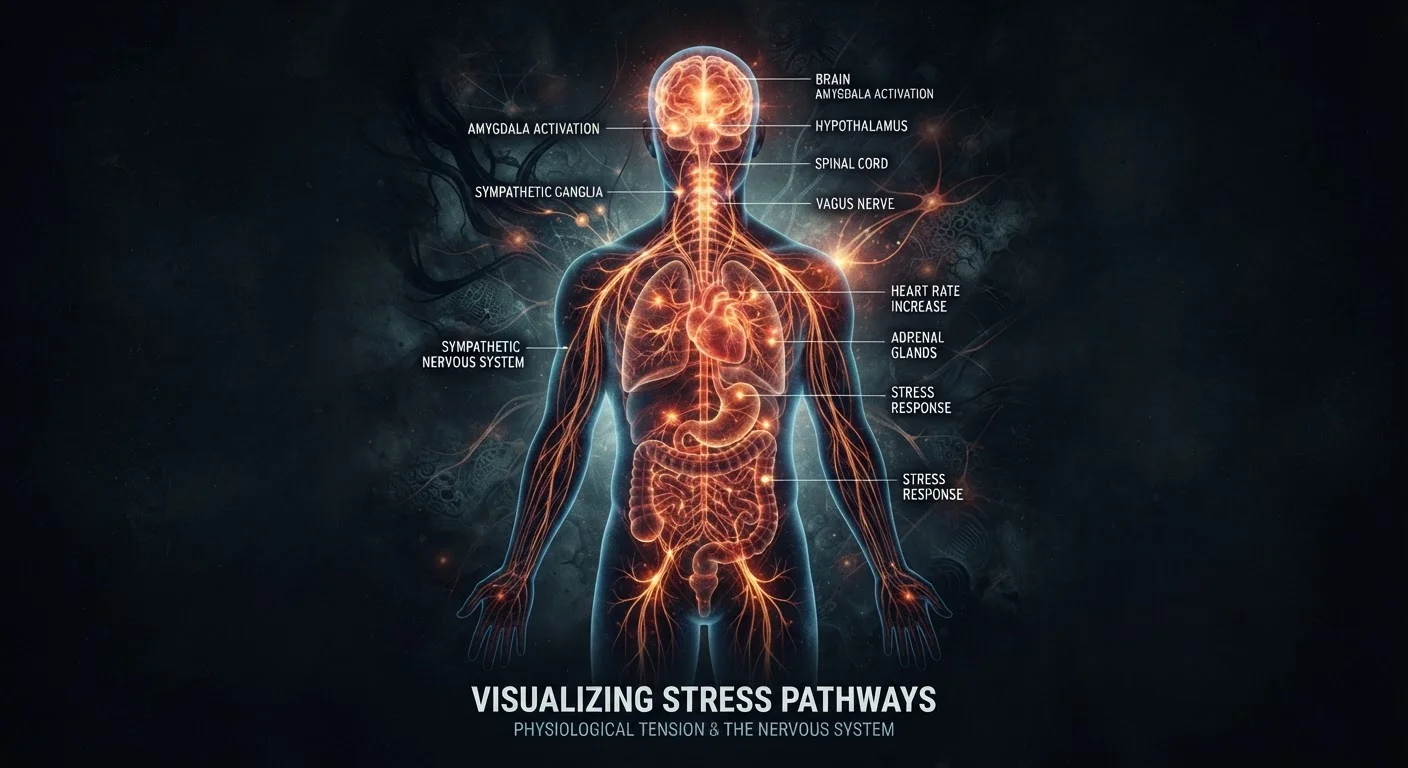
Physiologically, chronic stress is characterized by persistently elevated levels of glucocorticoids, particularly cortisol, secreted by the hypothalamic-pituitary-adrenal (HPA) axis, which can dysregulate immune, metabolic, and cardiovascular function.
The Body's Stress Response: Built for Sprints, Not Marathons
The human stress response is an evolutionary masterpiece - when functioning correctly. When the brain perceives a threat, the hypothalamus signals the adrenal glands to release adrenaline and cortisol, sharpening focus, elevating heart rate, and redirecting energy toward muscles. This fight-or-flight response is ideally suited to acute, time-limited challenges.
The problem is that modern stressors - financial pressure, job insecurity, caregiving demands, digital overload - rarely have a clear endpoint. The brain continues signaling danger even when no physical threat exists, keeping the body in a sustained state of physiological alert. What was designed for short sprints is forced into a marathon it was never built to run.
77%
Adults reporting physical stress symptoms
According to the American Psychological Association's Stress in America survey, a large majority of US adults report experiencing physical symptoms they attribute to stress.
2-3×
Elevated cardiovascular risk with chronic stress
Research published in peer-reviewed cardiology journals suggests individuals with persistently high psychosocial stress face substantially elevated risk of adverse cardiovascular events compared to low-stress peers.
40%
Adults say stress affects sleep
The American Psychological Association has consistently found that roughly four in ten American adults report stress-related sleep disruption in national surveys.
Cortisol: Helpful Hormone Turned Harmful Houseguest
Cortisol is central to understanding how chronic stress damages the body. In the short term, it is genuinely useful - mobilizing energy reserves, reducing inflammation during injury, and enhancing alertness. But when cortisol remains elevated for extended periods, its effects reverse course.
Persistent high cortisol is associated with:
- Immune suppression: The body's defenses are dialed down, increasing susceptibility to infections and slowing wound healing.
- Metabolic disruption: Cortisol promotes fat storage, particularly around the abdomen, and can impair insulin sensitivity over time.
- Cardiovascular strain: Sustained elevated blood pressure and heart rate increase wear on arterial walls.
- Sleep disruption: Cortisol levels naturally dip at night to allow deep sleep - chronic stress blunts this cycle, degrading sleep quality even when total hours appear normal.
Importantly, these effects are not immediately obvious. They accumulate quietly, which is why chronic stress is sometimes described by researchers as an "invisible" contributor to poor health outcomes.
Track Your Stress Signals Early
Many people don't recognize chronic stress until physical symptoms - persistent headaches, disrupted sleep, or recurring illness - become hard to ignore. Keeping a brief daily log of mood, energy, and sleep quality can help you spot patterns before they compound. Even a few minutes of self-reflection each evening builds awareness that supports earlier intervention.
The Brain Under Prolonged Pressure
Stress doesn't just affect the body - it reshapes the brain itself. The hippocampus, which plays a key role in memory consolidation and emotional regulation, is particularly vulnerable to sustained cortisol exposure. Animal and human research has documented measurable reductions in hippocampal volume among individuals with prolonged stress or stress-related conditions.
The amygdala - the brain's threat-detection center - tends to become more reactive under chronic stress, amplifying anxiety and making it harder to accurately assess risk. Meanwhile, the prefrontal cortex, responsible for rational decision-making and impulse control, shows reduced activity. The net effect is a brain that is simultaneously more reactive and less able to regulate that reactivity.
These neurological shifts help explain why people under chronic stress often report difficulty concentrating, emotional volatility, and a sense of being perpetually on edge - even during objectively calm moments. Understanding these patterns can help contextualize why everyday habits that erode emotional resilience can compound over time.
“The brain is not simply a passive recipient of stress - it is an active mediator of the stress response, and its structure and function are shaped by the hormonal environment that chronic stress creates.”
— Bruce McEwen, Neuroendocrinologist and former Head of the Harold and Margaret Milliken Hatch Laboratory of Neuroendocrinology, Rockefeller University
What Helps: Building Back Physiological Balance
The research on chronic stress also points toward meaningful countermeasures. The body's stress response is not fixed - it responds to conditions, and conditions can change. General wellness research points to several approaches that support HPA axis regulation over time:
- Consistent physical movement helps lower baseline cortisol and supports sleep architecture.
- Social connection activates oxytocin pathways that buffer the stress response.
- Mindfulness practices have shown measurable effects on cortisol variability in multiple peer-reviewed studies.
- Sleep prioritization is foundational - the HPA axis relies on adequate sleep to reset overnight.
These are not quick fixes, but cumulative habits that shift the body's baseline over weeks and months. For practical guidance on building these habits into a realistic schedule, our guide on building a daily stress-management routine offers a structured starting point.
It's equally worth recognizing that stress needs vary across life phases - the stressors and coping resources available at 35 differ substantially from those at 55. Exploring how emotional well-being needs shift across life stages can help contextualize your own experience.
This article is for general informational and educational purposes only and does not constitute medical advice. If you are experiencing persistent physical or mental health symptoms you believe may be related to stress, please consult a qualified healthcare professional.