
High Mileage vs. Low Mileage Vehicles: What the Cost Difference Looks Like Over Time

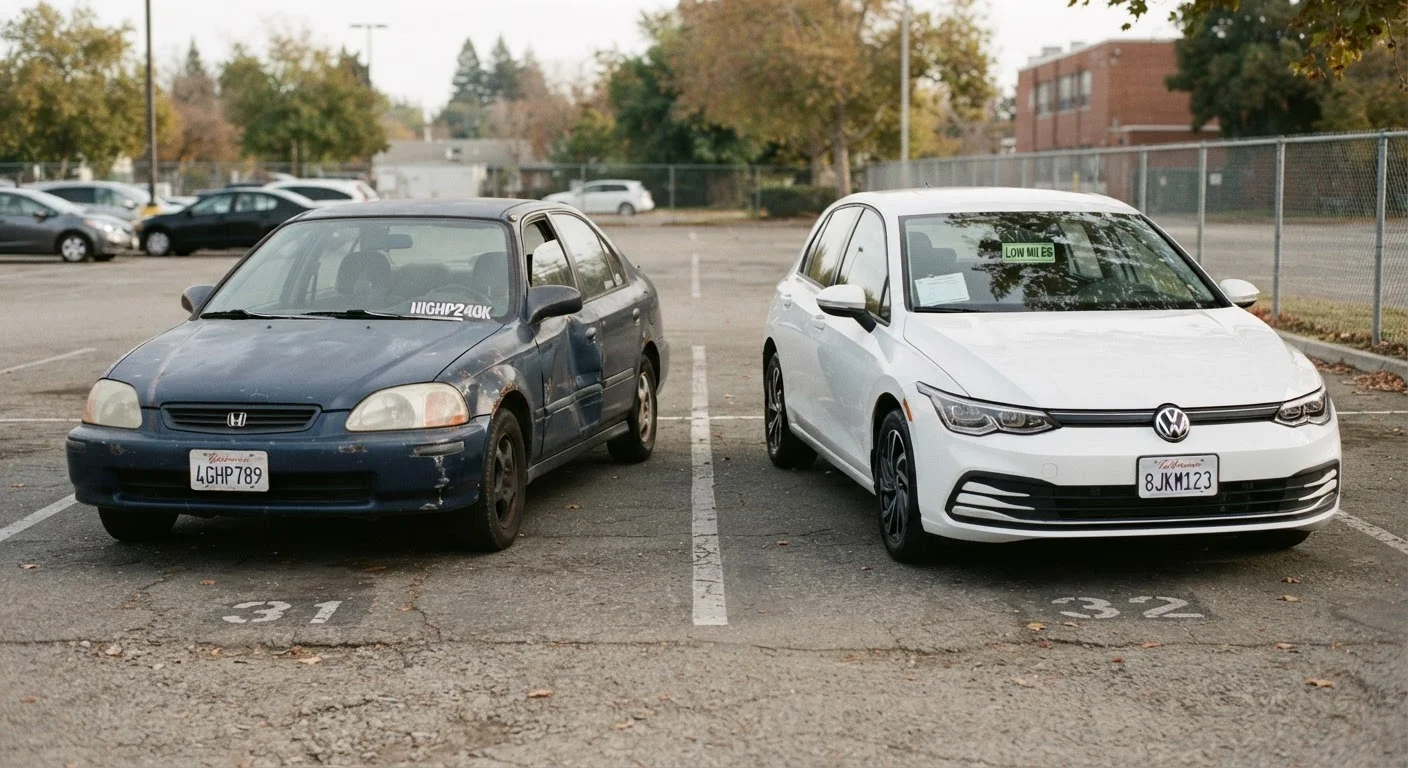
Key Takeaways
- High-mileage vehicles cost less upfront but typically carry higher maintenance and repair expenses over time.
- Insurance premiums are generally lower on older, higher-mileage vehicles due to reduced replacement value.
- Depreciation hits low-mileage vehicles harder in the first few years, which can offset some maintenance savings.
- Fuel economy tends to decline gradually as engine wear accumulates past 100,000 miles.
- Total cost of ownership depends heavily on vehicle make, model, and how well previous owners maintained it.
Our Verdict
Neither a high-mileage nor a low-mileage vehicle is automatically the smarter financial choice - the gap closes or widens depending on maintenance history, vehicle type, and how long you plan to own it. Low-mileage vehicles offer predictability and lower near-term repair risk; high-mileage vehicles offer a lower entry point but demand closer attention to ongoing costs.
| Best for | Recommended |
|---|---|
| Buyers seeking lower upfront cost and short-term ownership | High-mileage vehicle |
| Owners planning to keep a vehicle for five or more years | Low-mileage vehicle |
| Drivers wanting predictable monthly expenses | Low-mileage vehicle |
| Those working within strict purchase-price constraints | High-mileage vehicle with verified service history |
The Upfront Price Gap - and Why It Narrows
A vehicle with 90,000-120,000 miles on the odometer can cost anywhere from 30% to 50% less than a comparable model with under 30,000 miles, depending on make, age, and condition. That gap looks compelling at first glance. But the sticker difference rarely tells the full story once you factor in what comes next.
Depreciation is the great equalizer. New and low-mileage vehicles lose value fastest in their first three years - industry data consistently shows a new vehicle can shed 15-25% of its value within the first year alone. A high-mileage vehicle has already absorbed most of that depreciation, meaning the owner is less exposed to that loss. However, a low-mileage vehicle also retains more resale value if you sell within a reasonable window, which partially offsets that early drop.
For a clear-eyed look at how all ownership costs layer together, see the full annual ownership cost breakdown.
Maintenance and Repair: Where High-Mileage Costs Accumulate
This is where the high-mileage trade-off becomes most visible. Vehicles approaching or exceeding 100,000 miles often face a cluster of predictable service needs: timing belts or chains, water pumps, suspension components, transmission fluid services, and brake system overhauls. These aren't hypothetical - they're scheduled wear items that arrive on timeline regardless of prior ownership quality.
According to AAA's vehicle ownership cost research, average annual maintenance and repair costs for vehicles over seven years old can run $1,000-$1,500 per year more than for vehicles under four years old, though this varies significantly by brand and vehicle class. Luxury models and trucks tend to see steeper repair bills at higher mileages than economy sedans.
The car maintenance hub offers guidance on which services matter most at different mileage intervals.
Always Verify Service History Before Buying
A high-mileage vehicle with complete, documented service records is meaningfully lower risk than one with no history. Always request maintenance records and consider a pre-purchase inspection by an independent mechanic. This single step can prevent costly surprises and give you real leverage when negotiating price.
One underappreciated factor: a high-mileage vehicle with complete, documented service records is meaningfully lower risk than one with no history. Always request maintenance records and consider a pre-purchase inspection by an independent mechanic before committing.
Insurance and Fuel: The Ongoing Cost Split
Insurance premiums are tied closely to a vehicle's market value. Because high-mileage vehicles are worth less, comprehensive and collision coverage costs less - sometimes significantly so. A driver insuring a 10-year-old sedan with 110,000 miles may pay 20-35% less annually for full coverage than one insuring a three-year-old equivalent. That delta compounds year over year.
Fuel economy is a subtler factor. Engine efficiency does degrade with age and wear, though modern engines are designed to maintain acceptable efficiency well past 100,000 miles if properly maintained. The more meaningful variable is often the vehicle's original fuel rating - an older, less efficient platform will cost more to fuel regardless of mileage. Lifetime fuel costs add up more than most owners expect, and this deserves weight in any comparison.
| High-Mileage Vehicle (100k+ miles) | Low-Mileage Vehicle (under 30k miles) | |
|---|---|---|
| Purchase price | Significantly lower | Significantly higher |
| Depreciation exposure | Minimal - already absorbed | Higher in first 1-3 years |
| Annual maintenance costs | Higher - wear items due | Lower - under warranty or new |
| Insurance premiums | Lower - reduced vehicle value | Higher - greater replacement cost |
| Fuel economy | Slight decline possible with wear | Typically at rated efficiency |
| Repair predictability | Lower - more variables | Higher - fewer unknowns |
| Resale value | Limited upside | Stronger if sold within 5 years |
| Best ownership horizon | Short- to medium-term | Medium- to long-term |
Making the Numbers Work for Your Situation
The financially sound choice depends on three questions: How long do you plan to own the vehicle? What's your tolerance for unpredictable repair costs? And what does the specific vehicle's maintenance history look like?
A low-mileage vehicle bought at a premium makes stronger financial sense if you intend to own it for seven or more years, want warranty coverage, and prefer predictable expenses. A high-mileage vehicle can be a rational choice if the purchase price is significantly lower, the car has a strong reliability record for its model, and you have access to affordable mechanical service.
Geography also shapes the math. Registration fees, insurance minimums, and even road conditions that accelerate wear vary by state. Where you live can change what you pay by hundreds of dollars annually. Vehicle class plays a role too - trucks and SUVs carry different cost profiles than sedans at both ends of the mileage spectrum.