

Key Takeaways
- Most car batteries last three to five years, with heat accelerating degradation more than cold.
- Parasitic drain - small electrical draws when the car is off - is a leading cause of premature battery failure.
- Short trips that don't allow the alternator to fully recharge the battery shorten its lifespan significantly.
- A voltage reading below 12.4 volts on a resting battery is an early warning sign worth investigating.
- Replacing a battery proactively before failure is far less disruptive and often less expensive than an emergency replacement.
Why Car Batteries Fail Sooner Than Expected
The average car battery is rated for three to five years of service, but real-world conditions often cut that short. Heat is the primary culprit - sustained high temperatures accelerate the chemical degradation inside the battery, causing internal plates to corrode faster. Cold weather is harder on performance but less damaging to overall lifespan. If you live somewhere with hot summers, expect to be on the shorter end of that range.
Short-trip driving is another underappreciated killer. Every time you start a cold engine, you draw heavily from the battery. The alternator - which recharges the battery while the car runs - needs roughly 15 to 30 minutes of highway-speed driving to restore a full charge. If most of your trips are under 10 minutes, the battery slowly runs a deficit and never fully recovers. Over months, this compounds into significant wear.
Seasonal temperature swings affect the battery more than almost any other component - worth reviewing before summer or winter sets in.
The Hidden Culprits: Parasitic Drain and Electrical Load
Parasitic drain refers to the electrical current your car draws even when the ignition is off. Some draw is normal - your clock, alarm system, and keyless entry module all sip power continuously. But a faulty relay, a glove box light that doesn't switch off, or an aftermarket accessory wired incorrectly can bleed the battery down to a dangerously low state of charge overnight.
Modern vehicles with more electronics - advanced infotainment systems, telematics modules, multiple driver-assist processors - carry a higher baseline parasitic load than older cars. If your battery repeatedly dies without an obvious reason, a qualified mechanic can perform a parasitic draw test to identify the source. It's a straightforward diagnostic that many shops offer.
3-5 years
Typical car battery service life
The Car Care Council notes that battery lifespan varies significantly based on climate, driving habits, and maintenance practices.
~50%
Capacity loss in extreme heat
AAA research has indicated that high ambient temperatures can significantly accelerate battery degradation compared to moderate climates.
Adding unnecessary accessories like phone chargers, dash cams, or USB hubs that draw power when the car is off adds to this load. Unplugging these when parked for extended periods is a simple, free precaution.
How to Spot a Battery in Decline
A dying battery rarely fails without warning - the signals are just easy to overlook. The most common early indicators include a sluggish engine crank on startup, dashboard warning lights flickering briefly, and headlights that appear dimmer than usual at idle. If your car hesitates noticeably before turning over, treat that as a yellow flag.
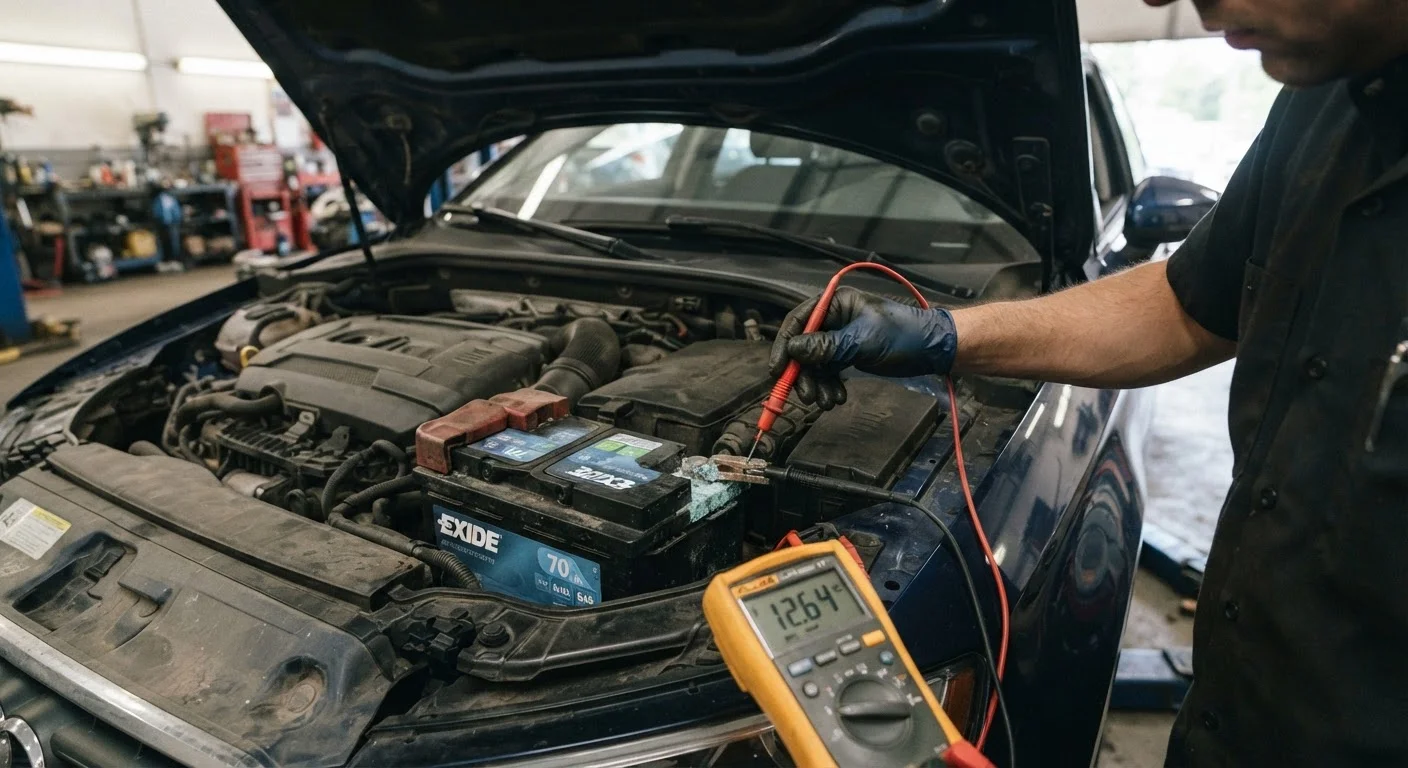
A basic multimeter tells you a lot. A fully charged, healthy battery should read approximately 12.6 volts at rest (engine off, 30 minutes after last use). Anything below 12.4 volts suggests a partial discharge; below 12.0 volts points to a significantly depleted or degraded battery. Load testing - which applies a controlled current draw to simulate starting - is more definitive and is offered free at many auto parts stores.
When to Let a Professional Test Your Battery
If your car is slow to crank, especially on a mild morning, don't wait for a full failure. A load test performed by a mechanic or at a parts store goes beyond a simple voltage check - it simulates real starting conditions and reveals whether a battery that looks fine on a multimeter will actually hold up. This is especially worth doing before a long road trip or heading into a harsh winter season.
For a broader view of what maintenance tasks actually matter versus what's outdated advice, see common car maintenance myths that still circulate among drivers.
Best Practices to Extend Battery Life
Drive for at least 20-30 minutes at moderate speed after short trips accumulate
Short trips prevent the alternator from restoring the charge drawn during startup. Consistent deficit charging degrades battery capacity over time and shortens its effective service life.
Check battery terminals every six months for corrosion and ensure connections are tight
Corroded or loose terminals increase electrical resistance, which strains the battery during charging and discharging cycles. Poor connections can also mimic battery failure symptoms and cause unnecessary replacements.
Unplug accessories that draw power when the car is parked for extended periods
Aftermarket chargers, dash cams, and USB adapters plugged into always-on ports continue drawing current when the car is off. Over days or weeks of inactivity, this parasitic load can drain a healthy battery to a damaging depth of discharge.
Have the battery load-tested annually once it reaches two years of age
A battery can pass a basic voltage check while still failing under the actual load of an engine start. Load testing reveals true capacity and gives you time to replace proactively rather than being stranded.
Use a trickle charger or battery maintainer if the vehicle sits unused for more than two weeks
Batteries self-discharge gradually at rest. A fully charged battery left unused for a month can drop below the threshold where it accepts a full recharge, permanently reducing capacity.
Staying ahead of battery wear doesn't require expensive tools or frequent shop visits. Most of what protects a battery is simply avoiding the habits and conditions that stress it most. For a broader maintenance framework, car maintenance from the ground up covers every major system in your vehicle.
If you're tracking battery replacement alongside other ownership expenses, managing car ownership costs offers practical strategies without compromising reliability.